For Love of Country Small Town in a World at War: Valley City’s Remarkable World War II Stories
For Love of Country – Every year in the Fall issue, the Cowboy Chronicle does a story to highlight the sacrifices and honor of those who have served.
The National Park Service established the American World War II Heritage Cities Program to recognize communities whose wartime contributions were vital but less visible than monuments or battlefield sites. As part of the Natural Resources Management Act, signed into law in 2019, the program highlights the importance of the American home front and preserves the stories of communities whose citizens supported the war in myriad ways. The Valley City Historical Society led the nomination. The NPS officially announced Valley City’s designation in September 2024.
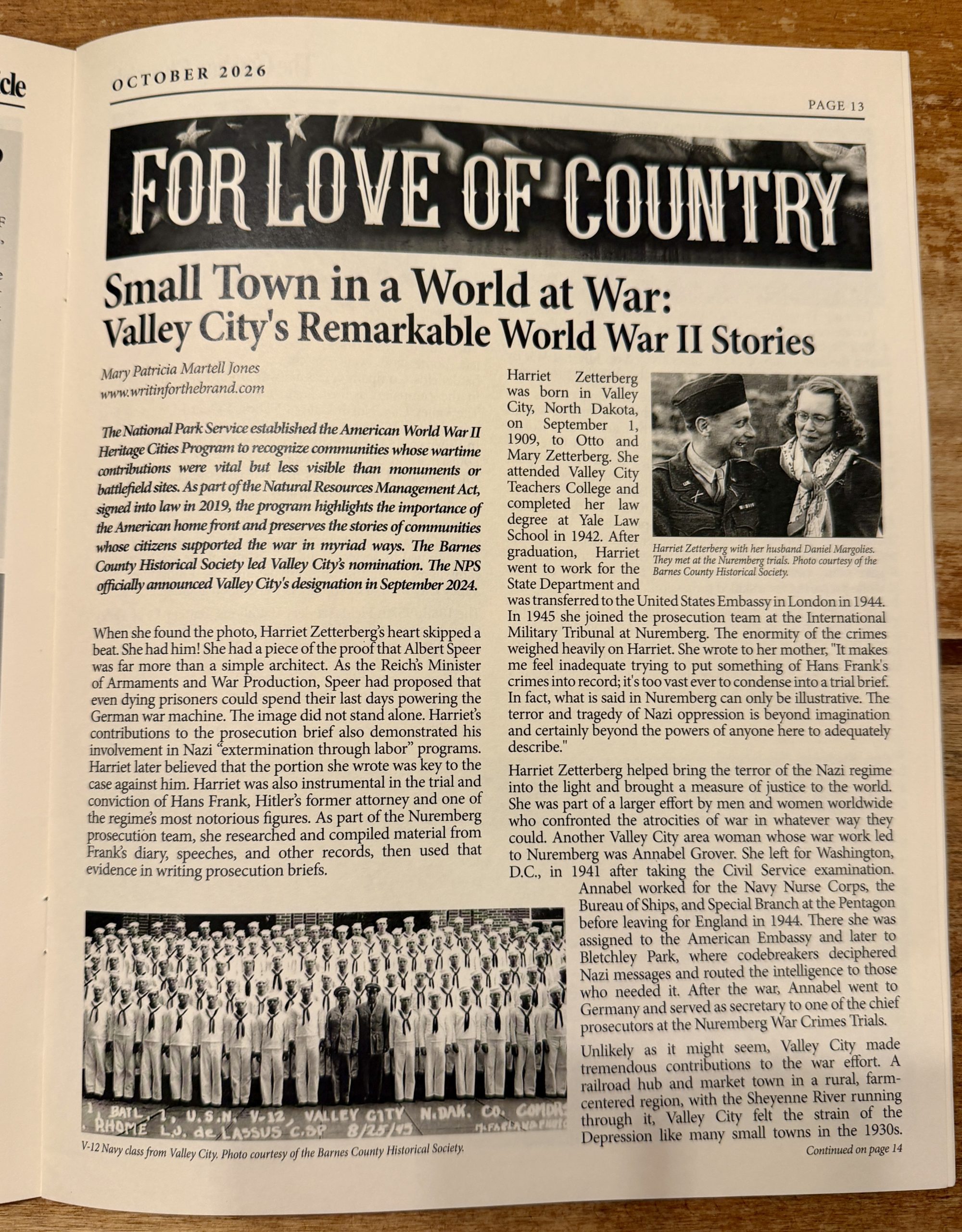
When she found the photo, Harriet Zetterberg’s heart skipped a beat. She had him! She had a piece of the proof that Albert Speer was far more than a simple architect. As the Reich’s Minister of Armaments and War Production, Speer had proposed that even dying prisoners could spend their last days powering the German war machine. The image did not stand alone. Harriet’s contributions to the prosecution brief also demonstrated his involvement in Nazi “extermination through labor” programs. Harriet later believed that the portion she wrote was key to the case against him. Harriet was also instrumental in the trial and conviction of Hans Frank, Hitler’s former attorney and one of the regime’s most notorious figures. As part of the Nuremberg prosecution team, she researched and compiled material from Frank’s diary, speeches, and other records, then used that evidence in writing prosecution briefs.
Harriet Zetterberg was born in Valley City, North Dakota, on September 1, 1909, to Otto and Mary Zetterberg. She attended Valley City Teachers College and completed her law degree at Yale Law School in 1942. After graduation, Harriet went to work for the State Department and was transferred to the United States Embassy in London in 1944. In 1945 she joined the prosecution team at the International Military Tribunal at Nuremberg. The enormity of the crimes weighed heavily on Harriet. She wrote to her mother, “It makes me feel inadequate trying to put something of Hans Frank’s crimes into record; it’s too vast ever to condense into a trial brief. In fact, what is said in Nuremberg can only be illustrative. The terror and tragedy of Nazi oppression is beyond imagination and certainly beyond the powers of anyone here to adequately describe.”
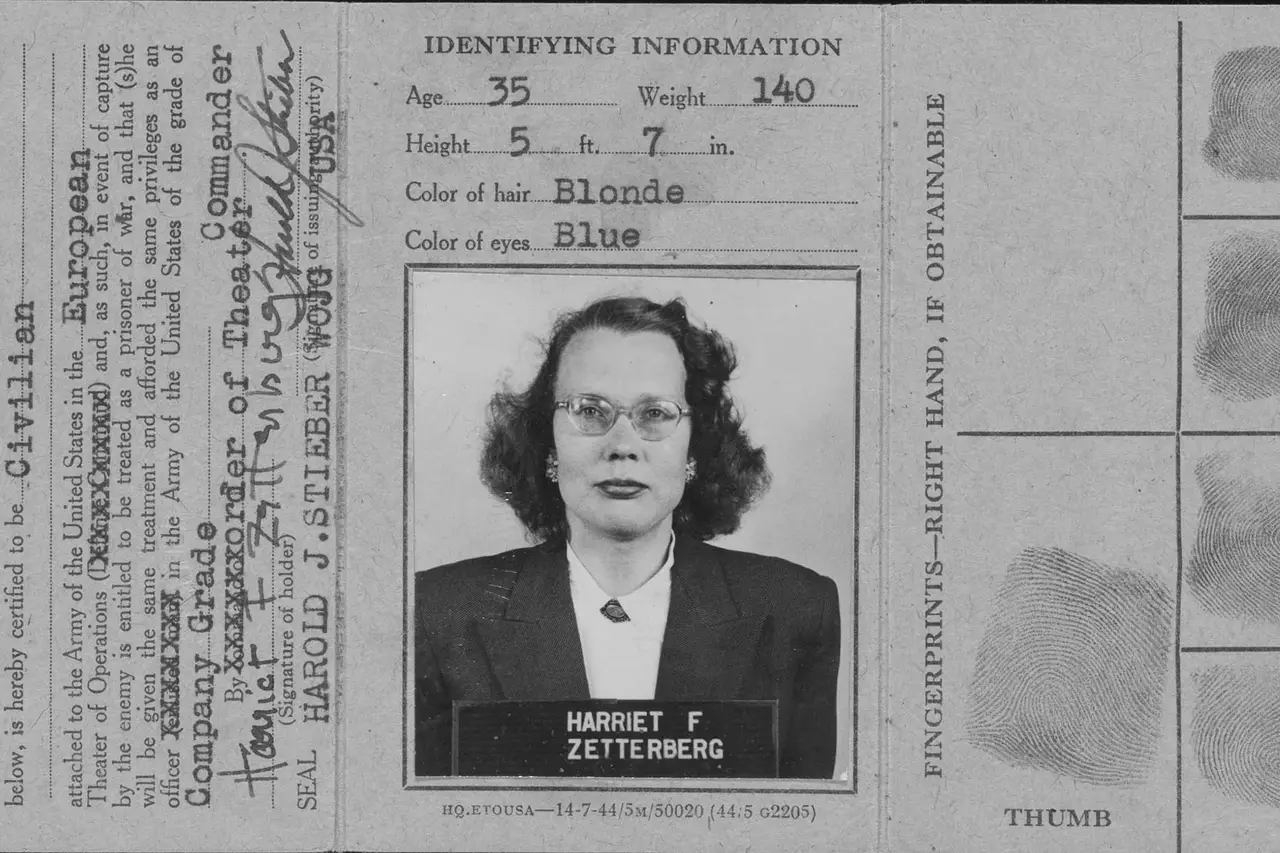
Harriet Zetterberg helped bring the terror of the Nazi regime into the light and brought a measure of justice to the world. She was part of a larger effort by men and women worldwide who confronted the atrocities of war in whatever way they could. Another Valley City area woman whose war work led to Nuremberg was Annabel Grover. She left for Washington, D.C., in 1941 after taking the Civil Service examination. Annabel worked for the Navy Nurse Corps, the Bureau of Ships, and Special Branch at the Pentagon before leaving for England in 1944. There she was assigned to the American Embassy and later to Bletchley Park, where codebreakers deciphered Nazi messages and routed the intelligence to those who needed it. After the war, Annabel went to Germany and served as secretary to one of the chief prosecutors at the Nuremberg War Crimes Trials.
Unlikely as it might seem, Valley City made tremendous contributions to the war effort. A railroad hub and market town in a rural, farm-centered region, with the Sheyenne River running through it, Valley City felt the strain of the Depression like many small towns in the 1930s. World War II gave a renewed purpose to this close-knit prairie community. With a population of 5,917 in 1940, Valley City was a small town even by the standards of the day, yet the city was perfectly positioned to play a significant role with its Teachers College and Mercy Hospital School of Nursing.
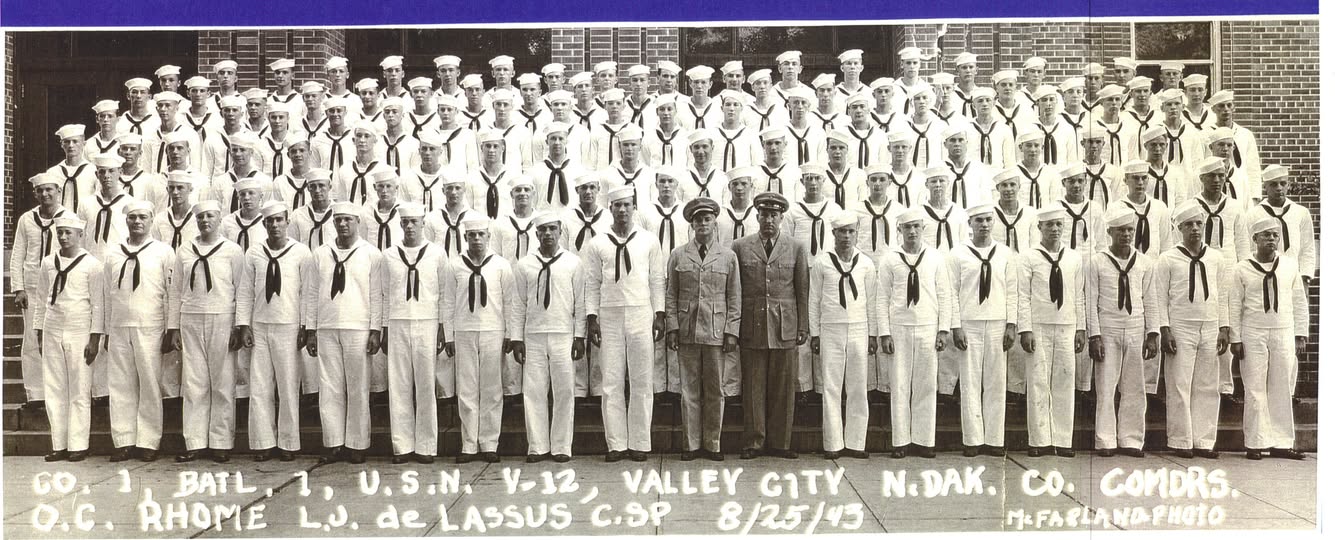
By late 1942 the U.S. Navy had grown by sixty percent and needed far more commissioned officers than its regular channels could provide. At the same time, college enrollment rates were falling across the country, causing additional concern. To meet these critical needs, President Franklin Roosevelt urged the military to include institutions of higher learning in their mobilization plans and the Navy responded by creating the V-12 College Training Program, partnering with one hundred thirty-one private and state-run colleges across the country. Valley City State Teachers College was contracted by the U.S. Navy in 1943, and the first group of 233 trainees arrived on July 1, 1943. By 1945, Valley City had trained 532 men through this program.
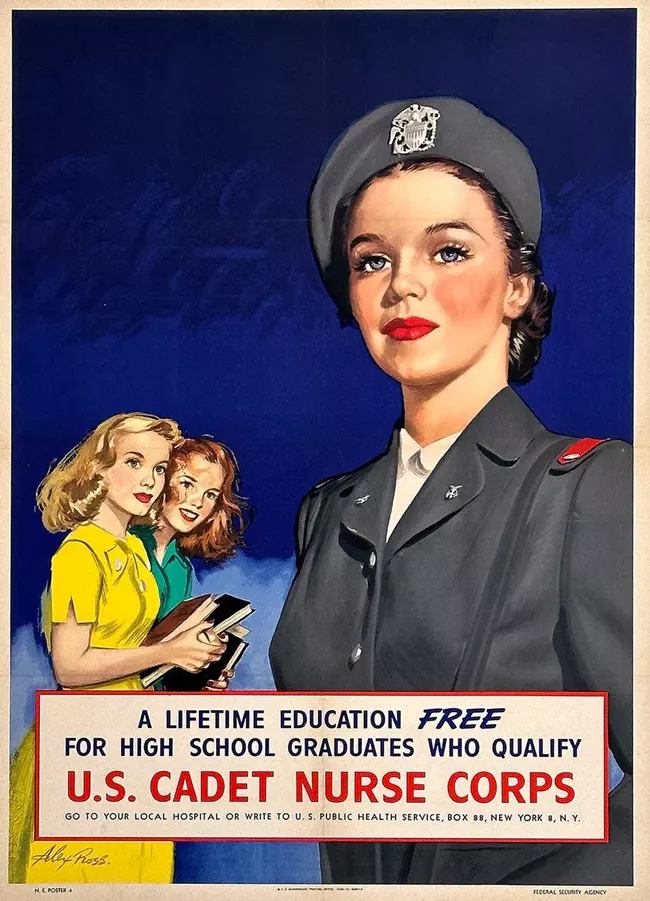
While the future Naval officers were training, across the Sheyenne River the Mercy Hospital School of Nursing was an important part of the war effort with the Cadet Nurse Corps. Congress passed the Bolton Nurse Training Act in June 1943 to address the wartime nursing shortage, and Mercy Hospital requested to join the program, becoming one of about 1,100 schools nationwide that participated. Cadet nurses pledged to serve in the military or essential civilian roles for the duration of the war, filling a critical need. The program at Valley City continued until the last cadet nurse graduated in 1948. The Cadet Nurse Corps helped meet a desperate wartime need and gave many young women the chance to serve their country while preparing for a skilled profession.
The Valley City community was doing its part on the home front through scrap drives, war bond and stamp drives, local war production at the Russell-Miller Milling Company, victory gardens, and civil defense efforts. Norma Egstrom, better known as Peggy Lee, was from the Valley City area. She was a featured singer with the Benny Goodman Band and performed at military camps and bases across the country as part of USO tours.
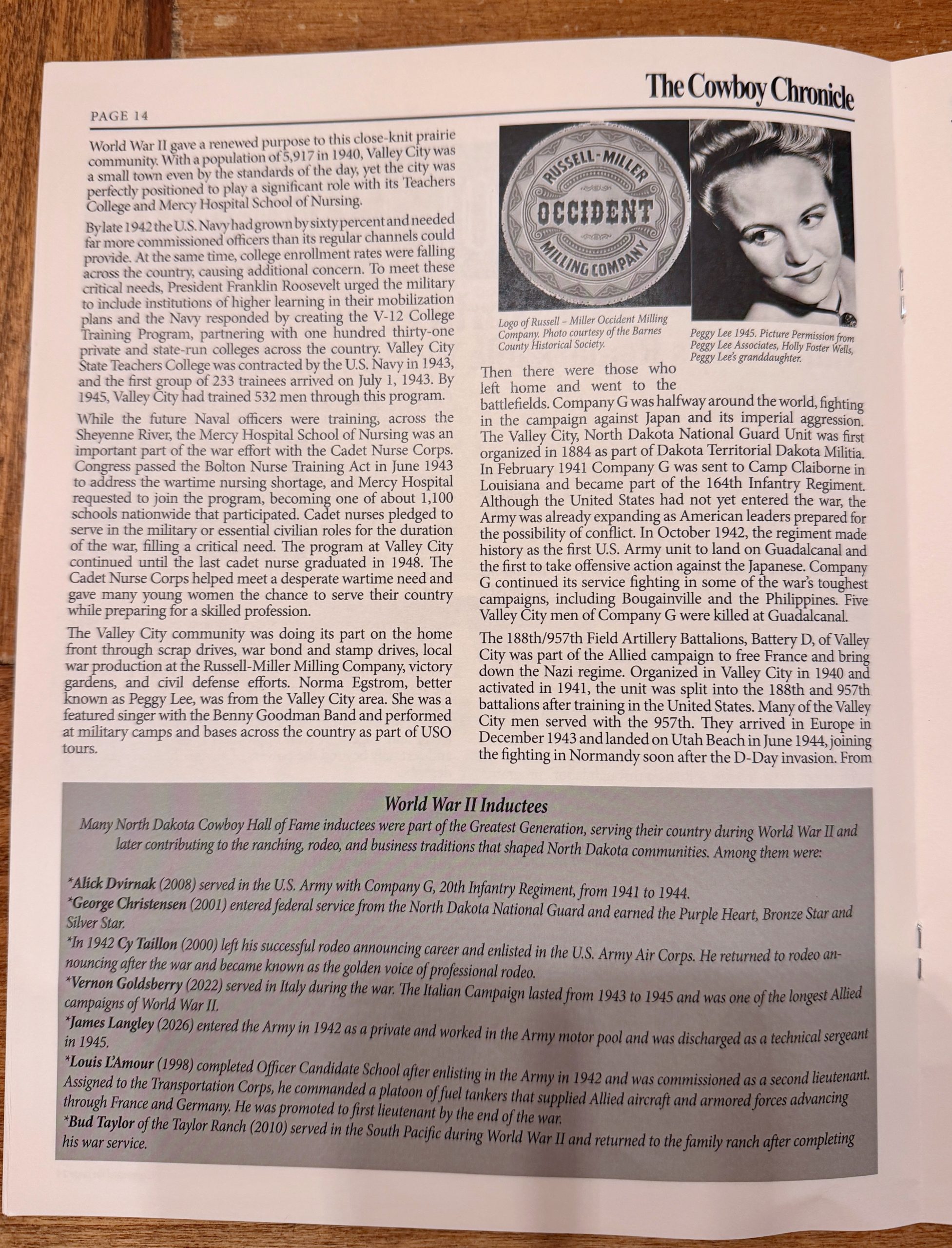
Then there were those who left home and went to the battlefields. Company G was halfway around the world, fighting in the campaign against Japan and its imperial aggression. The Valley City, North Dakota National Guard Unit was first organized in 1884 as part of Dakota Territorial Dakota Militia. In February 1941 Company G was sent to Camp Claiborne in Louisiana and became part of the 164th Infantry Regiment. Although the United States had not yet entered the war, the Army was already expanding as American leaders prepared for the possibility of conflict. In October 1942, the regiment made history as the first U.S. Army unit to land on Guadalcanal and the first to take offensive action against the Japanese. Company G continued its service fighting in some of the war’s toughest campaigns, including Bougainville and the Philippines. Five Valley City men of Company G were killed at Guadalcanal.
The 188th/957th Field Artillery Battalions, Battery D, of Valley City was part of the Allied campaign to free France and bring down the Nazi regime. Organized in Valley City in 1940 and activated in 1941, the unit was split into the 188th and 957th battalions after training in the United States. Many of the Valley City men served with the 957th. They arrived in Europe in December 1943 and landed on Utah Beach in June 1944, joining the fighting in Normandy soon after the D-Day invasion. From there, they fired counterbattery and interdiction missions that disrupted German movement and supply lines. The battalion fought across France, took part in the Battle of the Bulge, and ended the war with occupation duty in Germany.
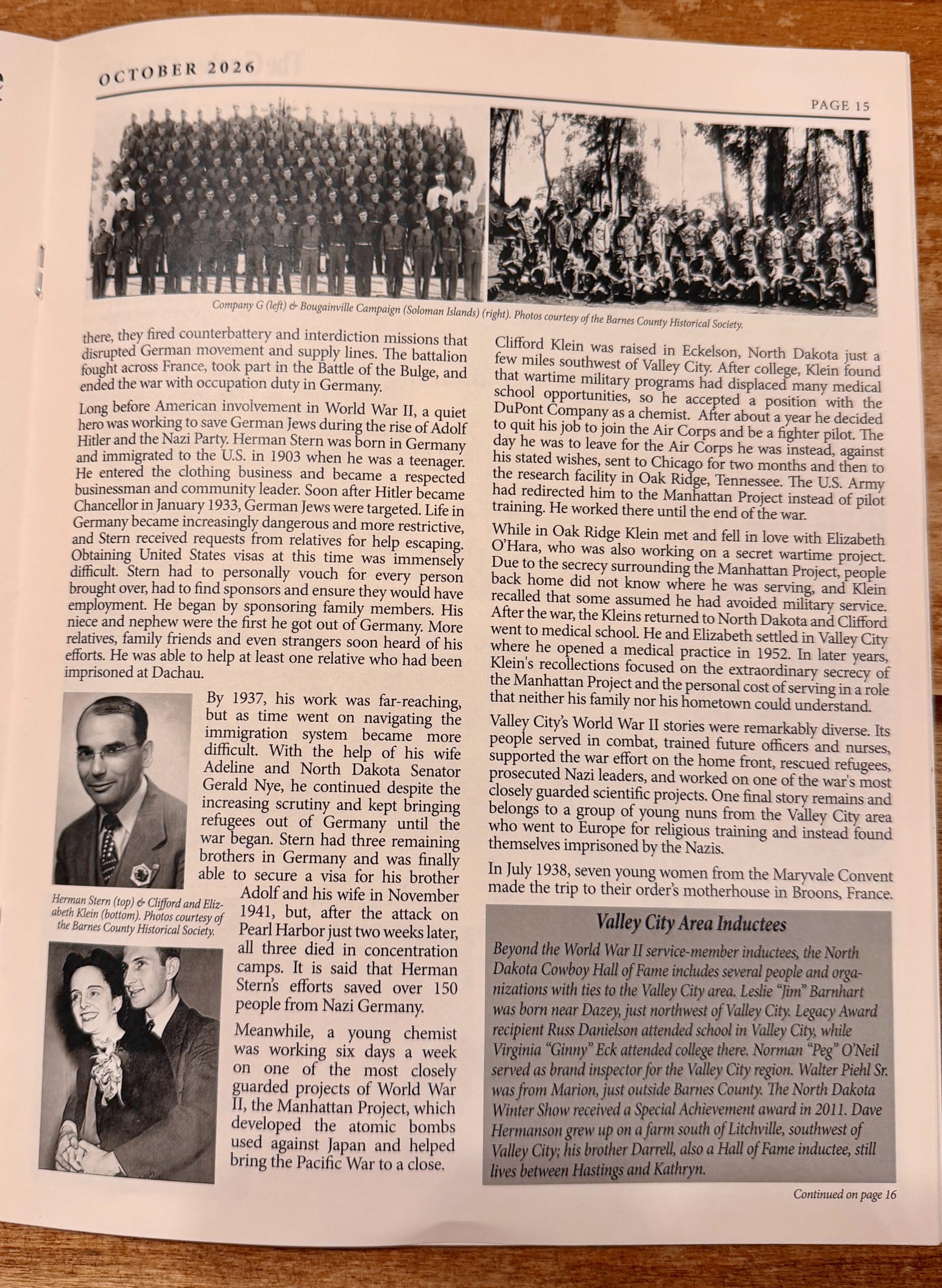
Long before American involvement in World War II, a quiet hero was working to save German Jews during the rise of Adolf Hitler and the Nazi Party. Herman Stern was born in Germany and immigrated to the U.S. in 1903 when he was a teenager. He entered the clothing business and became a respected businessman and community leader. Soon after Hitler became Chancellor in January 1933, German Jews were targeted. Life in Germany became increasingly dangerous and more restrictive, and Stern received requests from relatives for help escaping. Obtaining United States visas at this time was immensely difficult. Stern had to personally vouch for every person brought over, had to find sponsors and ensure they would have employment. He began by sponsoring family members. His niece and nephew were the first he got out of Germany. More relatives, family friends and even strangers soon heard of his efforts. He was able to help at least one relative who had been imprisoned at Dachau.
By 1937, his work was far-reaching, but as time went on navigating the immigration system became more difficult. With the help of his wife Adeline and North Dakota Senator Gerald Nye, he continued despite the increasing scrutiny and kept bringing refugees out of Germany until the war began. Stern had three remaining brothers in Germany and was finally able to secure a visa for his brother Adolf and his wife in November 1941, but, after the attack on Pearl Harbor just two weeks later, all three died in concentration camps. It is said that Herman Stern’s efforts saved over 150 people from Nazi Germany.
Meanwhile, a young chemist was working six days a week on one of the most closely guarded projects of World War II, the Manhattan Project, which developed the atomic bombs used against Japan and helped bring the Pacific War to a close.
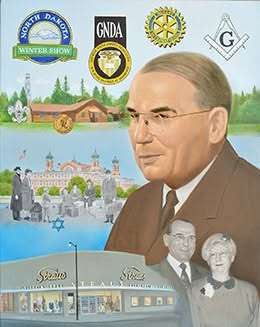
Clifford Klein was raised in Eckelson, North Dakota just a few miles southwest of Valley City. After college, Klein found that wartime military programs had displaced many medical school opportunities, so he accepted a position with the DuPont Company as a chemist. After about a year he decided to quit, join the Air Corps and be a fighter pilot. The day he was to leave for the Air Corps he was instead, against his stated wishes, sent to Chicago for two months and then to the research facility in Oak Ridge, Tennessee. The U.S. Army had redirected him to the Manhattan Project instead of pilot training. He worked there until the end of the war.
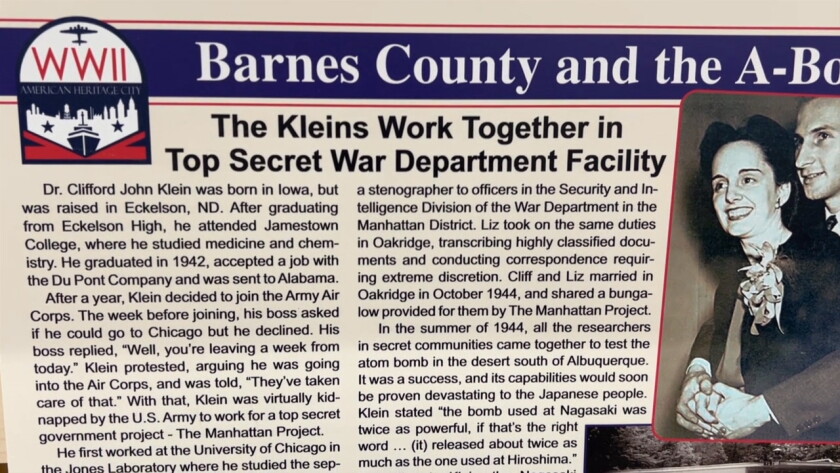
While in Oak Ridge Klein met and fell in love with Elizabeth O’Hara, who was also working on a secret wartime project. Due to the secrecy surrounding the Manhattan Project, people back home did not know where he was serving, and Klein recalled that some assumed he had avoided military service. After the war, the Kleins returned to North Dakota and Clifford went to medical school. He and Elizabeth settled in Valley City where he opened a medical practice in 1952. In later years, Klein’s recollections focused on the extraordinary secrecy of the Manhattan Project and the personal cost of serving in a role that neither his family nor his hometown could understand.
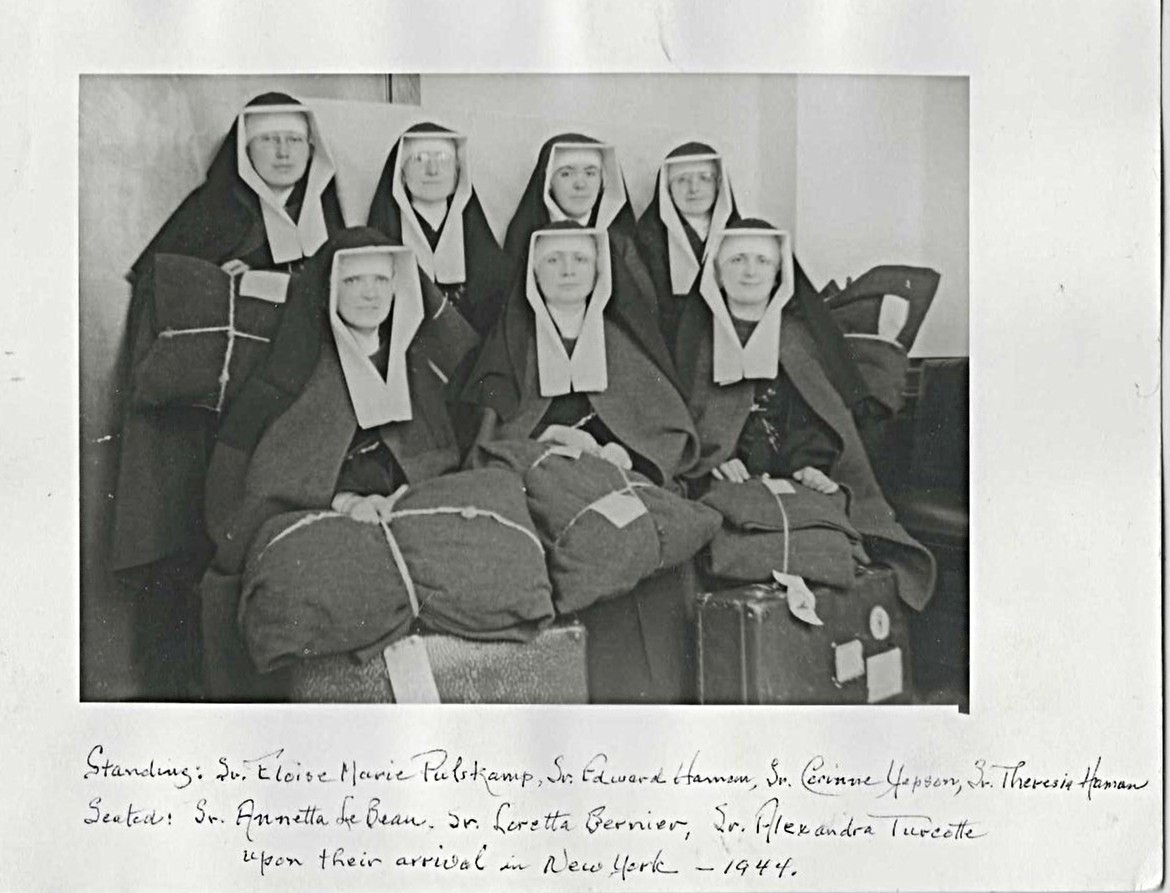
Valley City’s World War II stories were remarkably diverse. Its people served in combat, trained future officers and nurses, supported the war effort on the home front, rescued refugees, prosecuted Nazi leaders, and worked on one of the war’s most closely guarded scientific projects. One final story remains and belongs to a group of young nuns from the Valley City area who went to Europe for religious training and instead found themselves imprisoned by the Nazis.
In July 1938, seven young women from the Maryvale Convent made the trip to their order’s motherhouse in Broons, France. Sr. Annetta LeBeau was twenty years old and had just taken her vows with the Sisters of Mary of the Presentation. This was expected to be a routine trip for Sr. Annetta and her fellow sisters from Valley City: Sisters Edward, Corrine, Theresa, Eloise, Loretta, and Alexandra. Study at the motherhouse was a required part of their religious formation. The war began on September 1, 1939. France surrendered in June 1940. News of the war rarely reached their remote convent, and life continued normally until July 1940, when communication abruptly ceased with the United States. They knew it was only a matter of time before the war would directly affect them. Two years later, German soldiers finally arrived at the convent door. They were told to pack their possessions, and they would be leaving the following morning. Their destination was the resort town of Vittel that had been turned into an internment camp for foreign nationals, complete with barbed wire and German soldiers always surrounding them.
Days, in what had been dubbed “Camp Convent,” settled into a routine. They saw the planes flying overhead and would sometimes receive Red Cross packages. Life was uncertain. The sisters lived with a constant sense of abandonment and danger; sometimes a detainee would simply disappear, but they found ways to form a true community. The nuns developed a bartering system; they even requested cigarettes in the Red Cross packages to use as currency. Local workers would secretly help the sisters. One story tells of a laundress who smuggled items in and out for the sisters hidden in the laundry. They were quartered on an upper floor and so they had time to hide objects that might be confiscated by the soldiers before they got to them. The surprise inspections always started on the ground floor. On February 29, 1944, the sisters were released as part of an exchange between the Germans and the U.S. On March 15, 1944, they landed in New York Harbor. Sr. Annetta wrote in a memoir, “The old girl (Statue of Liberty) never looked so good!”
The NDCHF and WW II
Many North Dakota Cowboy Hall of Fame inductees were part of the Greatest Generation, serving their country during World War II and later contributing to the ranching, rodeo, and business traditions that shaped North Dakota communities. Among them were:
- Alick Dvirnak (2008) served in the U.S. Army with Company G, 20th Infantry Regiment, from 1941 to 1944.
- George Christensen (2001) entered federal service from the North Dakota National Guard and earned the Purple Heart, Bronze Star and Silver Star.
- In 1942 Cy Taillon (2000) left his successful rodeo announcing career and enlisted in the U.S. Army Air Corps. He returned to rodeo announcing after the war and became known as the golden voice of professional rodeo.
- Vernon Goldsberry (2022) served in Italy during the war. The Italian Campaign lasted from 1943 to 1945 and was one of the longest Allied campaigns of World War II.
- James Langley (2026) entered the Army in 1942 as a private and worked in the Army motor pool and was discharged as a technical sergeant in 1945.
- Louis L’Amour (1998) completed Officer Candidate School after enlisting in the Army in 1942 and was commissioned as a second lieutenant. Assigned to the Transportation Corps, he commanded a platoon of fuel tankers that supplied Allied aircraft and armored forces advancing through France and Germany. He was promoted to first lieutenant by the end of the war.
- Bud Taylor of the Taylor Ranch (2010) served in the South Pacific during World War II and returned to the family ranch after completing his war service.
Beyond the World War II service-member inductees, the North Dakota Cowboy Hall of Fame includes several people and organizations with ties to the Valley City area. Leslie “Jim” Barnhart was born near Dazey, just northwest of Valley City. Legacy Award recipient Russ Danielson attended school in Valley City, while Virginia “Ginny” Eck attended college there. Norman “Peg” O’Neil served as brand inspector for the Valley City region. Walter Piehl Sr. was from Marion, just outside Barnes County. The North Dakota Winter Show received a Special Achievement award in 2011. Dave Hermanson grew up on a farm south of Litchville, southwest of Valley City; his brother Darrell, also a Hall of Fame inductee, still lives between Hastings and Kathryn.
You May Also Like

Straight to the Horse’s Mouth

The Railroad and Settlement in Early North Dakota
