From Brooklyn to the Badlands: The Double Life of Vincenzo Capone
Fourth in the Pioneer Lawman Series
Published in the Cowboy Chronicle, Publication of the North Dakota Cowboy Hall of Fame, June 2026
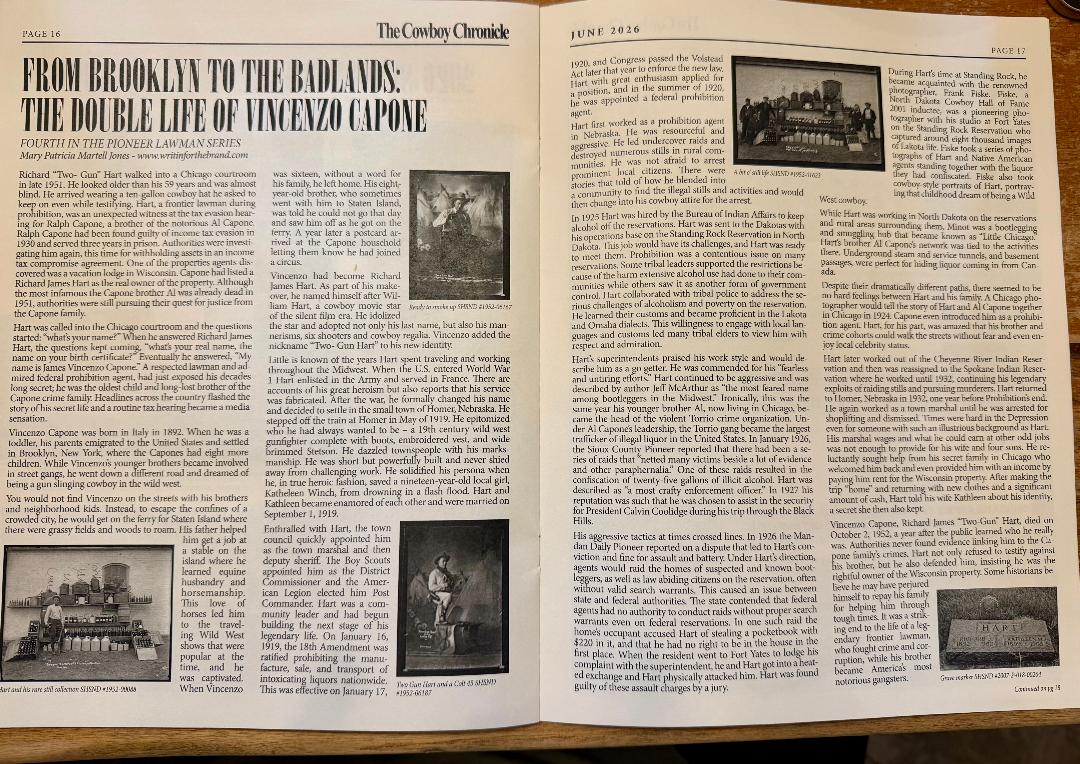
Richard “Two- Gun” Hart walked into a Chicago courtroom in late 1951. He looked older than his 59 years and was almost blind. He arrived wearing a ten-gallon cowboy hat he asked to keep on even while testifying. Hart, a frontier lawman during prohibition, was an unexpected witness at the tax evasion hearing for Ralph Capone, a brother of the notorious Al Capone. Ralph Capone had been found guilty of income tax evasion in 1930 and served three years in prison. Authorities were investigating him again, this time for withholding assets in an income tax compromise agreement. One of the properties agents discovered was a vacation lodge in Wisconsin. Capone had listed a Richard James Hart as the real owner of the property. Although the most infamous the Capone brother Al was already dead in 1951, authorities were still pursuing their quest for justice from the Capone family.
Hart was called into the Chicago courtroom and the questions started: “what’s your name?” When he answered Richard James Hart, the questions kept coming, “what’s your real name, the name on your birth certificate?” Eventually he answered, “My name is James Vincenzo Capone.” A respected lawman and admired federal prohibition agent, had just exposed his decades long secret; he was the oldest child and long-lost brother of the Capone crime family. Headlines across the country flashed the story of his secret life and a routine tax hearing became a media sensation.
Vincenzo Capone was born in Italy in 1892. When he was a toddler, his parents emigrated to the United States and settled in Brooklyn, New York, where the Capones had eight more children. While Vincenzo’s younger brothers became involved in street gangs, he went down a different road and dreamed of being a gun slinging cowboy in the wild west.
You would not find Vincenzo on the streets with his brothers and neighborhood kids. Instead, to escape the confines of a crowded city, he would get on the ferry for Staten Island where there were grassy fields and woods to roam. His father helped him get a job at a stable on the island where he learned equine husbandry and horsemanship. This love of horses led him to the traveling Wild West shows that were popular at the time, and he was captivated. When Vincenzo was sixteen, without a word for his family, he left home. His eight-year-old brother, who sometimes went with him to Staten Island, was told he could not go that day and saw him off as he got on the ferry. A year later a postcard arrived at the Capone household letting them know he had joined a circus.
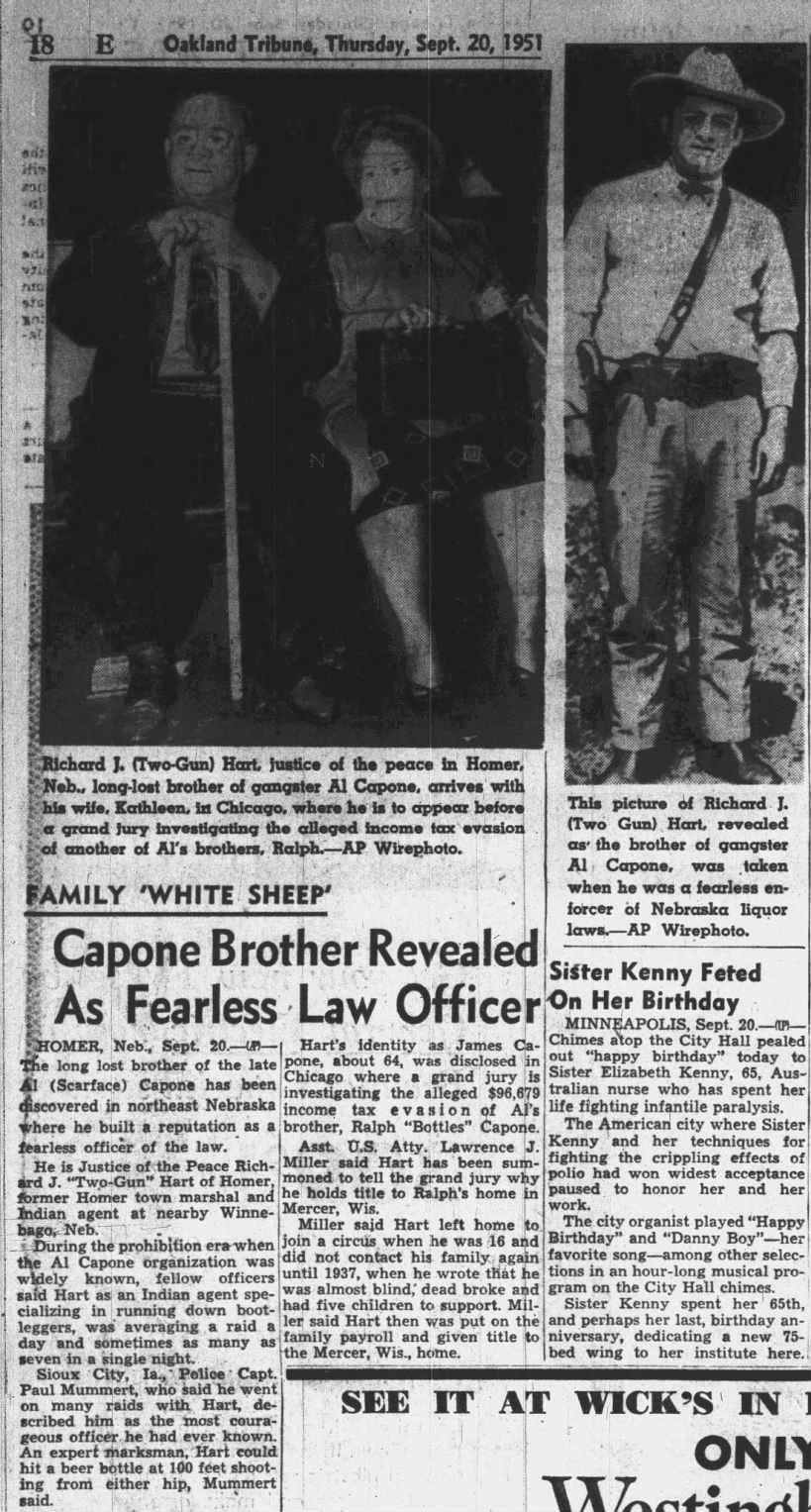
Vincenzo had become Richard James Hart. As part of his makeover, he named himself after William Hart, a cowboy movie star of the silent film era. He idolized the star and adopted not only his last name, but also his mannerisms, six shooters and cowboy regalia. Vincenzo added the nickname “Two- Gun Hart” to his new identity.
Little is known of the years Hart spent traveling and working throughout the Midwest. When the U.S. entered World War 1 Hart enlisted in the Army and served in France. There are accounts of his great heroism but also reports that his service was fabricated. After the war, he formally changed his name and decided to settle in the small town of Homer, Nebraska. He stepped off the train at Homer in May of 1919. He epitomized who he had always wanted to be – a 19th century wild west gunfighter complete with boots, embroidered vest, and wide brimmed Stetson. He dazzled townspeople with his marksmanship. He was short but powerfully built and never shied away from challenging work. He solidified his persona when he, in true heroic fashion, saved a nineteen-year-old local girl, Katheleen Winch, from drowning in a flash flood. Hart and Kathleen became enamored of each other and were married on September 1, 1919.
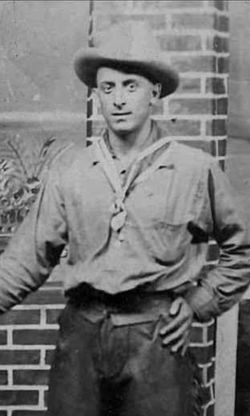
Enthralled with Hart, the town council quickly appointed him as the town marshal and then deputy sheriff. The Boy Scouts appointed him as the District Commissioner and the American Legion elected him Post Commander. Hart was a community leader and had begun building the next stage of his legendary life. On January 16, 1919, the 18th Amendment was ratified prohibiting the manufacture, sale, and transport of intoxicating liquors nationwide. This was effective on January 17, 1920, and Congress passed the Volstead Act later that year to enforce the new law. Hart with great enthusiasm applied for a position, and in the summer of 1920, he was appointed a federal prohibition agent.
Hart first worked as a prohibition agent in Nebraska. He was resourceful and aggressive. He led undercover raids and destroyed numerous stills in rural communities. He was not afraid to arrest prominent local citizens. There were stories that told of how he blended into a community to find the illegal stills and activities and would then change into his cowboy attire for the arrest.
In 1925 Hart was hired by the Bureau of Indian Affairs to keep alcohol off the reservations.
Hart was sent to the Dakotas with his operations base on the Standing Rock Reservation in North Dakota. This job would have its challenges, and Hart was ready to meet them. Prohibition was a contentious issue on many reservations. Some tribal leaders supported the restrictions because of the harm extensive alcohol use had done to their communities while others saw it as another form of government control. Hart collaborated with tribal police to address the serious challenges of alcoholism and poverty on the reservation. He learned their customs and became proficient in the Lakota and Omaha dialects. This willingness to engage with local languages and customs led many tribal elders to view him with respect and admiration.
Hart’s superintendents praised his work style and would describe him as a go getter. He was commended for his “fearless and untiring efforts.” Hart continued to be aggressive and was described by author Jeff McArthur as “the most feared name among bootleggers in the Midwest.” Ironically, this was the same year his younger brother Al, now living in Chicago, became the head of the violent Torrio crime organization. Under Al Capone’s leadership, the Torrio gang became the largest trafficker of illegal liquor in the United States. In January 1926, the Sioux County Pioneer reported that there had been a series of raids that “netted many victims beside a lot of evidence and other paraphernalia.” One of these raids resulted in the confiscation of twenty-five gallons of illicit alcohol. Hart was described as “a most crafty enforcement officer.” In 1927 his reputation was such that he was chosen to assist in the security for President Calvin Coolidge during his trip through the Black Hills.
His aggressive tactics at times crossed lines. In 1926 the Mandan Daily Pioneer reported on a dispute that led to Hart’s conviction and fine for assault and battery. Under Hart’s direction, agents would raid the homes of suspected and known bootleggers, as well as law abiding citizens on the reservation, often without valid search warrants. This caused an issue between state and federal authorities. The state contended that federal agents had no authority to conduct raids without proper search warrants even on federal reservations. In one such raid the home’s occupant accused Hart of stealing a pocketbook with $220 in it, and that he had no right to be in the house in the first place. When the resident went to Fort Yates to lodge his complaint with the superintendent, he and Hart got into a heated exchange and Hart physically attacked him. Hart was found guilty of these assault charges by a jury.
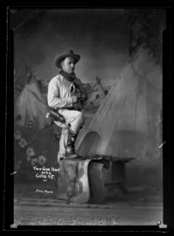
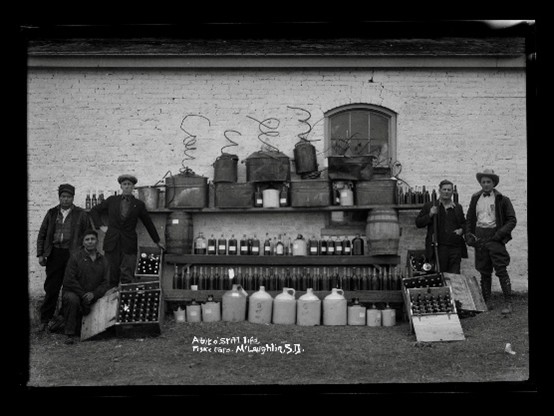
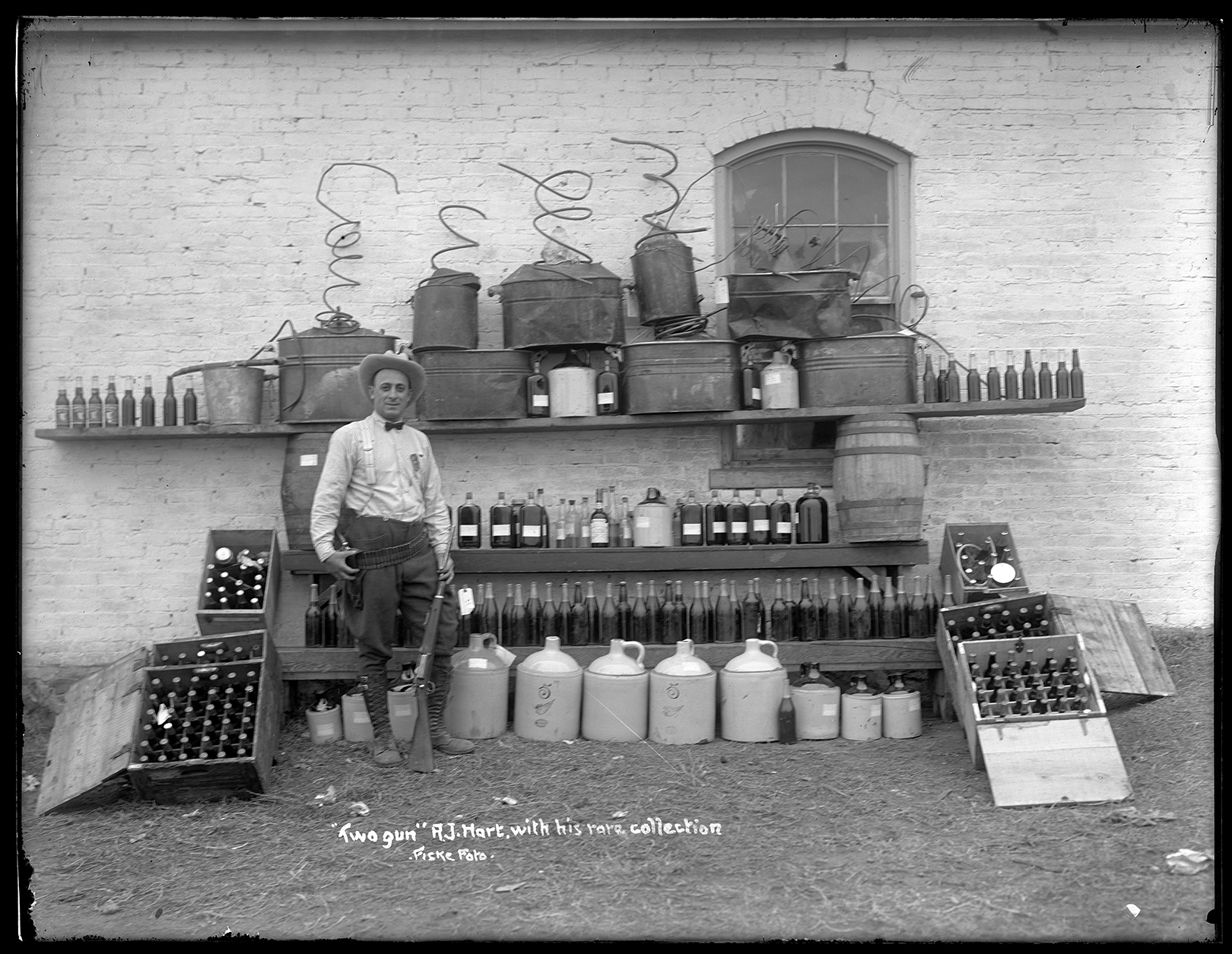
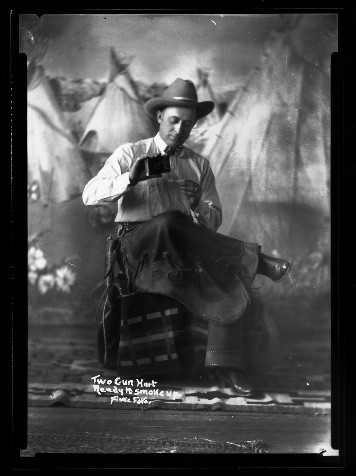
During Hart’s time at Standing Rock, he became acquainted with the renowned photographer, Frank Fiske. Fiske, a North Dakota Cowboy Hall of Fame 2001 inductee, was a pioneering photographer with his studio at Fort Yates on the Standing Rock Reservation who captured around eight thousand images of Lakota life. Fiske took a series of photographs of Hart and Native American agents standing together with the liquor they had confiscated. Fiske also took cowboy-style portraits of Hart, portraying that childhood dream of being a Wild West cowboy.
While Hart was working in North Dakota out on the reservations and rural areas surrounding them, Minot was a bootlegging and smuggling hub that became known as “Little Chicago.” Hart’s brother Al Capone’s network was tied to the activities there. Underground steam and service tunnels, and basement passages, were perfect for hiding liquor coming in from Canada.
Despite their dramatically different paths, there seemed to be no hard feelings between Hart and his family. A Chicago photographer would tell the story of Hart and Al Capone together in Chicago in 1924. Capone even introduced him as a prohibition agent. Hart, for his part, was amazed that his brother and crime cohorts could walk the streets without fear and even enjoy local celebrity status.
Hart later worked out of the Cheyenne River Indian Reservation and then was reassigned to the Spokane Indian Reservation where he worked until 1932, continuing his legendary exploits of raiding stills and pursuing murderers. Hart returned to Homer, Nebraska in 1932, one year before Prohibition’s end. He again worked as a town marshal until he was arrested for shoplifting and dismissed. Times were hard in the Depression even for someone with such an illustrious background as Hart. His marshal wages and what he could earn at other odd jobs was not enough to provide for his wife and four sons. He reluctantly sought help from his secret family in Chicago who welcomed him back and even provided him with an income by paying him rent for the Wisconsin property. After making the trip “home” and returning with new clothes and a significant amount of cash, Hart told his wife Kathleen about his identity, a secret she then also kept.
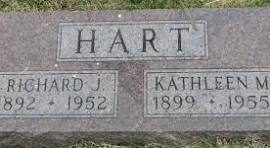
Vincenzo Capone, Richard James “Two-Gun” Hart, died on October 2, 1952, a year after the public learned who he really was. Authorities never found evidence linking him to the Capone family’s crimes. Hart not only refused to testify against his brother, but he also defended him, insisting he was the rightful owner of the Wisconsin property. Some historians believe he may have perjured himself to repay his family for helping him through tough times. It was a striking end to the life of a legendary frontier lawman, who fought crime and corruption, while his brother became one of America’s most notorious gangsters.
For more information on Frank Fiske, NDCHF Inductee:
Looking Through the Life and Lens of Frank Fiske
NDCHF Cowboy Chronicle December 2023 article here on this website.
Resources:
Websites:
https://blog.statemuseum.nd.gov/blog/capone-north-dakota
https://www.newspapers.com/image/882948923/?match=1&terms=two%20gun%20hart
https://www.newspapers.com/image/1133206705/?match=1&clipping_id=192067215
https://www.newspapers.com/image/94004442/?match=1&terms=two%20gun%20hart
https://www.newspapers.com/image/94004442/?match=1&terms=two%20gun%20hart
https://www.newspapers.com/image/1014890029/?match=1&clipping_id=new
https://www.newspapers.com/image/1126409958/?match=1&clipping_id=new
https://www.newspapers.com/image/413338981/?match=1&clipping_id=192068327
https://www.newspapers.com/image/1187383824/?match=1&terms=two%20gun%20hart
https://www.newspapers.com/image/1139252092/?match=1&clipping_id=new
https://historynet.com/two-gun-hart-the-prohibition-cowboy/?f
https://todayinhistory.blog/2024/03/27/march-28-1892-the-other-capone/
Books:
McArthur, Jeff, Two Gun Hart: Law Man, Cowboy, and Long-Lost Brother of Al Capone, c. 2013,Bandwagon Books, Burbank, CA
You May Also Like

Lydia Langer: The Unexpected Candidate Amid 1930’s Political Scandal and Intrigue

Biography of George W. Nohle
